
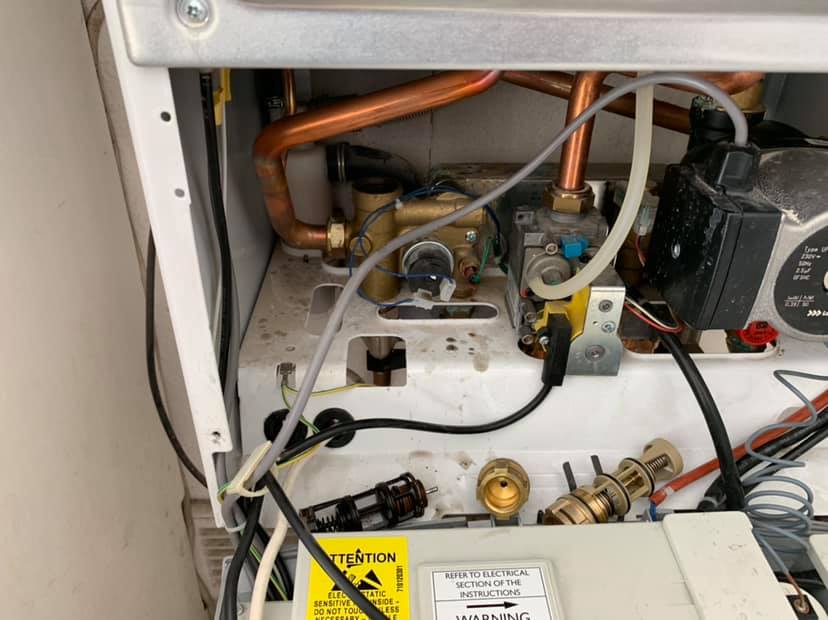
…
Why the First Questions Matter
When a boiler breaks down, every minute counts; customers are often stressed, homes are cold, and hot water is unavailable. In these situations, a Gas Safe engineer needs to work quickly — but rushing into the boiler without context can waste time.
At Certificates4UK Ltd, we’ve handled thousands of boiler repairs, CP12 certificates, and heating services across Surrey and London — covering areas like Kingston, Richmond, Wimbledon, and Molesey. Our experience shows that asking the right questions at the start is the fastest route to accurate diagnostics.
Think of it like detective work: the customer’s answers give clues, narrow down possibilities, and often reveal the root cause before a spanner is even lifted.
1. Has Any Recent Work Been Done?
This question uncovers many “mystery” faults. Customers often forget to mention small jobs carried out by other trades. Even unrelated work — like plumbing, extensions, or bathroom installations — can affect the heating system.
Examples of problems caused by recent work:
- Reversed flow/return pipes: often overlooked during refits.
- Closed or isolated valves: left shut after work.
- Leaks or backfeeds: introduced by new connections.
- Airlocks: trapped air after draining/refilling a system.
Tip: Always ask where the work was done. A new bathroom, loft conversion, or kitchen remodel could be the source of your boiler fault.
2. When Did the Problem Start?
Timing is critical. A system that fails overnight usually has a very different cause than one that has declined slowly over weeks.
- Sudden failure: often caused by a component fault such as a fan, PCB (printed circuit board), pump, or even a tripped fuse.
- Gradual decline: points to issues like blocked heat exchanger, limescale build-up, or pump wear.
Knowing when the problem started helps engineers avoid guesswork.
3. What Happens When You Use Heating or Hot Water?
Customers often describe symptoms in detail: noises, flashing lights, or error messages. Encourage them to walk through what happens when they switch on the heating or hot water.
This helps you separate:
- Demand/supply problems (system not calling for heat or hot water).
- Control or sensor faults (boiler receives demand but fails to respond).
- Example: A customer says, “Hot water runs cold after 2 minutes.” This instantly suggests a diverter valve or plate heat exchanger fault, not a power supply issue.
4. Are There Any Error or Fault Codes?
Modern boilers display fault codes for almost every failure. Noting these codes before resetting can save huge amounts of time.
Common examples:
- F22 (Vaillant): low water pressure.
- F28 (Vaillant): ignition failure.
- E119 (Ideal): low system pressure.
Tip: Always write down or photograph error codes. They’re the engineer’s shortcut to the affected circuit.
5. How’s the Water Flow?
Water flow is often overlooked, yet it’s critical. Ask if the tap or shower flow feels:
- Normal
- Weak
- Fluctuating
Low or inconsistent flow can reveal:
- Blocked filters or strainers.
- The main water pressure issues.
- Faulty cartridges or tap aerators.
If hot water cuts out during a shower, check the mains flow before blaming the boiler.
6. Do the Radiators Heat Up Normally?
Comparing radiator performance with hot water output helps pinpoint faults.
- Radiators cold, hot water fine → possible diverter valve issue.
- Radiators warm slowly, hot water weak → pump problem or system blockage.
- No heat in top-floor radiators → likely airlock or pressure issue.
Many engineers waste time inside boilers when the issue lies in the circulation.
7. Have You Noticed Pressure Drops?
Frequent topping-up is a tell-tale sign. Ask if the customer adds water every few days or weeks.
Causes include:
- System leaks (radiators, pipework).
- Expansion vessel failure.
- Pressure relief valve (PRV) passing.
Important: Pressure loss doesn’t always mean a visible leak. Microscopic leaks can still cause persistent drops.
8. Are the Controls Working?
Before assuming a boiler fault, always confirm:
- The thermostat is set and working.
- The programmer or timer is calling for heat.
- Batteries in wireless thermostats are fresh.
Many “boiler breakdowns” turn out to be faulty controls, not faulty boilers.
9. Any Issues with Power or Gas Supply?
Check the basics:
- Are fuses or breakers tripping?
- Do other gas appliances (like cookers or fires) work?
- Is there a prepay meter that could have run out of credit?
This avoids wasted diagnostic time when the issue is external to the boiler.
10. Any Strange Noises, Smells, or Leaks?
Customers often notice early signs that engineers can’t detect immediately:
- Noises: kettling, whistling, pump cavitation, gurgling from trapped air.
- Smells: gas or combustion leaks (must always be treated as urgent).
- Leaks: water around valves, joints, or beneath the boiler.
Taking customer observations seriously can prevent missed hazards.
Pro Tip: Always Check the Basics First
Before dismantling, confirm:
- Mains supplies — gas, water, and electricity.
- System pressure — within safe range.
- Controls — are they calling for heat?
- Pipework configuration — ensure no reversed connections.
This simple checklist prevents wasted effort and unnecessary part replacements.
Why Gas Safe Certification Matters
Only Gas Safe-registered engineers can legally work on gas appliances in the UK. For landlords, it’s also a legal requirement to provide a valid Gas Safety Certificate (CP12) every 12 months.
At Certificates4UK Ltd, we combine boiler breakdown expertise with full CP12, EICR, and EPC compliance services, making us a one-stop solution for property safety in Surrey and London.
Final Thoughts
Boiler diagnostics don’t start with tools — they start with questions. By asking the right ones, Gas Safe engineers can diagnose faults quickly, reduce downtime, and keep customers safe.
At Certificates4UK Ltd, our team is trusted by homeowners, landlords, and letting agents across Surrey and London. From boiler breakdowns and power flushes to Gas Safety Certificates (CP12) and full property compliance, we ensure your heating systems run safely and efficiently.
Contact Certificates4UK Ltd
Need a reliable Gas Safe engineer for boiler repairs, safety checks, or certification? We’re here to help.
We cover:
Molesey • Walton • Woking • Cobham• Weybridge • Sunbury-on-Thames • Surrey • London
Before replacing any parts or booking costly work, let one of our qualified engineers carry out a professional inspection to save you time and money.
Booking Options:
- 🌐 Book Online – Simple, quick, and available 24/7
- 📞 Call: 07596 076700 or 07869 520044
- 📧 Email: info@certificates4uk.co.uk
📍 Proudly serving Molesey, Surrey, and London, we specialise in:
Boiler repairs, Gas Safety Certificates (CP12), Installation, plumbing, EICR testing, EPC inspections, and full property compliance.
⭐ With over 14 years of experience and 150+ five-star reviews, Certificates4UK Ltd is the trusted choice for safe, professional, and cost-effective heating services.

Leave a Reply