
Introduction
PAT testing for landlords in the UK is one of the most common electrical safety questions landlords ask. Many property owners want to know whether Portable Appliance Testing is a legal requirement or simply good practice.
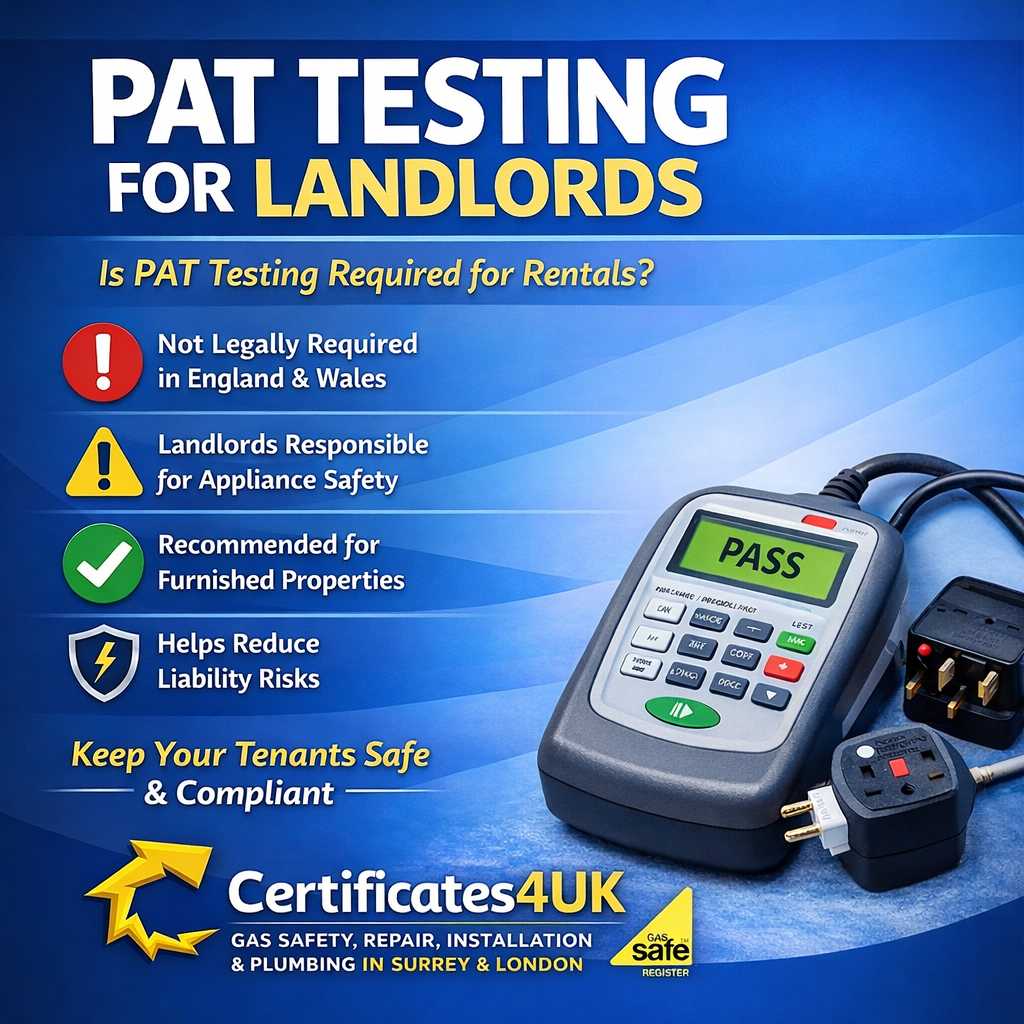
In most cases, PAT testing is not expressly required by law in England and Wales, but landlords are still responsible for making sure any electrical appliances they provide are safe to use. The legal duty sits around safety, not around one single named certificate. Government guidance confirms that rented properties must meet electrical safety standards, including regular checks of installations, and Scottish guidance goes further on appliance safety.
If you supply electrical items to tenants, PAT testing is one of the clearest ways to show that you have taken reasonable steps to protect them. For landlords already managing wider compliance, it also works well alongside an EICR and electrical safety service, your PAT Testing service page, and related compliance guidance on the C4UK blog.
What Is PAT Testing?
PAT testing stands for Portable Appliance Testing. It is a safety inspection used to check whether plug-in electrical appliances are safe for continued use.
This usually includes:
- a visual inspection of plugs, cables, and casings
- electrical testing with specialist equipment
- identification of wear, damage, or faults
Typical landlord-supplied appliances include:
- fridges and freezers
- washing machines
- microwaves
- kettles and toasters
- lamps
- televisions
- extension leads
If the appliance belongs to the landlord, the landlord is responsible for its safety. That is why PAT testing is especially relevant in furnished lets and managed rental properties. Landlords looking for a practical service can link here to your live PAT Testing page.
Is PAT Testing a Legal Requirement for Rental Properties?
England and Wales
There is no specific law in England and Wales that says every landlord must carry out PAT testing. However, landlords do have a legal duty to ensure the electrical equipment they provide is safe, and the government’s guidance on electrical safety standards in rented property makes clear that safety obligations still apply.
That is why PAT testing is widely treated as best practice. It gives landlords a clear record that appliances have been inspected and helps support a safer rental property.
This section is also a good place to internally link to your broader compliance content, such as:
Both are highly relevant for landlords reviewing all required checks, not just PAT testing.
What the law focuses on
The legal position is less about a specific PAT certificate and more about whether the landlord can show they acted responsibly. In practice, PAT testing is often the easiest way to demonstrate that plug-in appliances have been checked.
For official guidance, you can visit:
- UK Government guidance on electrical safety standards in rented property
- Legislation.gov.uk: Electrical Safety Standards Regulations 2020
These sources explain the wider legal framework around electrical safety in rented homes.
Furnished vs Unfurnished Rental Properties
Furnished properties
If you let a property furnished, PAT testing becomes much more important. That is because you are usually supplying more portable electrical appliances, which increases your responsibility.
This often includes:
- kitchen appliances
- lamps
- extension leads
- white goods
- portable heaters
- entertainment devices
For furnished rentals, PAT testing is strongly recommended by many agents and landlords because it creates a clear paper trail and reduces avoidable risk.
These support conversion from informational traffic to enquiries and bookings.
Unfurnished properties
Unfurnished properties usually contain fewer landlord-supplied appliances, so PAT testing may not always be necessary. Even so, if you provide any plug-in item, that item still needs to be safe.
Examples might include:
- a cooker with electrical components
- a fridge
- a washing machine
- portable heaters
- supplied lamps
Even in a mostly unfurnished let, landlords should not assume appliance safety can be ignored.
What About Scotland?
Scotland is stricter in practice. Scottish landlord guidance states that private rented properties must undergo electrical safety checks at least every five years, including checks on appliances provided by the landlord. Scottish guidance also specifically addresses portable appliances provided to tenants.
So while people often ask whether PAT testing is “legally required,” the practical answer in Scotland is that landlords are expected to ensure portable appliances are checked, and records are kept.
More information can be found:
How Often Should PAT Testing Be Done?
There is no single fixed legal interval in England and Wales for PAT testing in rental properties. However, a sensible landlord policy is usually:
- Every 1 to 2 years for furnished rental properties
- at the change of tenancy
- sooner if appliances are old, damaged, or heavily used
The main point is to take a risk-based approach and keep records.
This is a strong place to add a related internal link to broader electrical compliance:
If you later publish a dedicated EICR article, that should also be linked here.
PAT Testing and Insurance in Surrey
PAT testing can also help with insurance and liability. After an electrical fire, shock incident, or tenant dispute, insurers may ask what checks were carried out on supplied appliances.
They may also ask for related documents, such as:
- EICR records
- maintenance records
- appliance inspection records
- PAT testing reports
PAT testing may not always be mandatory, but keeping records can help landlords show they acted responsibly.
A useful related link here is:
That article supports the wider landlord compliance journey.
Best Practice for Landlords
To reduce risk and stay organised, landlords should:
- Arrange an EICR at least every five years where required
- PAT test landlord-supplied portable appliances
- Keep all reports and certificates in one file
- Replace damaged appliances promptly
- Review safety at every new tenancy
This section is ideal for linking to multiple C4UK services and blog pages: service links
Related blog links
- What Certificates Does a Landlord Need in England?
- What Landlords Should Know About Gas Safety Certificates in HMOs
- Penalty for Missing a Gas Safety Certificate (CP12)
- Gas Safety Certificate CP12 Inspection Guide
These are all already live on your site and are closely related to landlord compliance.
Final Verdict: Do Landlords Need PAT Testing in Surrey?
In England and Wales, PAT testing is usually not a specific legal requirement, but landlords are still responsible for ensuring supplied appliances are safe. Government guidance and the broader legal framework make that duty clear.
In Scotland, appliance checking is more formalised as part of landlord electrical safety responsibilities, so PAT testing is effectively expected in most cases.
So the practical answer is:
- No, PAT testing is not usually mandatory in England and Wales
- Yes, landlords are still responsible for appliance safety
- Yes, PAT testing is strongly recommended
- Yes, it is especially important in furnished rentals and for record-keeping
For landlords who want a simple way to reduce risk, PAT testing remains one of the most sensible and affordable checks to carry out.
More information can be found:
- UK Government electrical safety guidance
- Legislation.gov.uk Electrical Safety Standards Regulations
- HSE landlords’ gas safety responsibilities
- HSE gas safety checks for landlords
- Scottish Government Repairing Standard guidance
Contact Certificates4UK Ltd
Need a reliable Gas Safe engineer for boiler repairs, safety checks, or certification? We’re here to help.
We cover:
Molesey • Walton • Woking • Cobham• Weybridge • Sunbury-on-Thames • Surrey • London
Before replacing any parts or booking costly work, let one of our qualified engineers carry out a professional inspection to save you time and money.
Booking Options:
- 🌐 Book Online – Simple, quick, and available 24/7
- 📞 Call: 07596 076700 or 07869 520044
- 📧 Email: info@certificates4uk.co.uk
📍 Proudly serving Molesey, Surrey, and London, we specialise in:
Boiler repairs, Gas Safety Certificates (CP12), Installation, plumbing, EICR testing, EPC inspections, and full property compliance.
⭐ Established in 2011, C4UK has been providing professional heating and property compliance services across Surrey and London. 150+ five-star reviews, Certificates4UK Ltd is the trusted choice for safe, professional, and cost-effective heating services.

Leave a Reply