
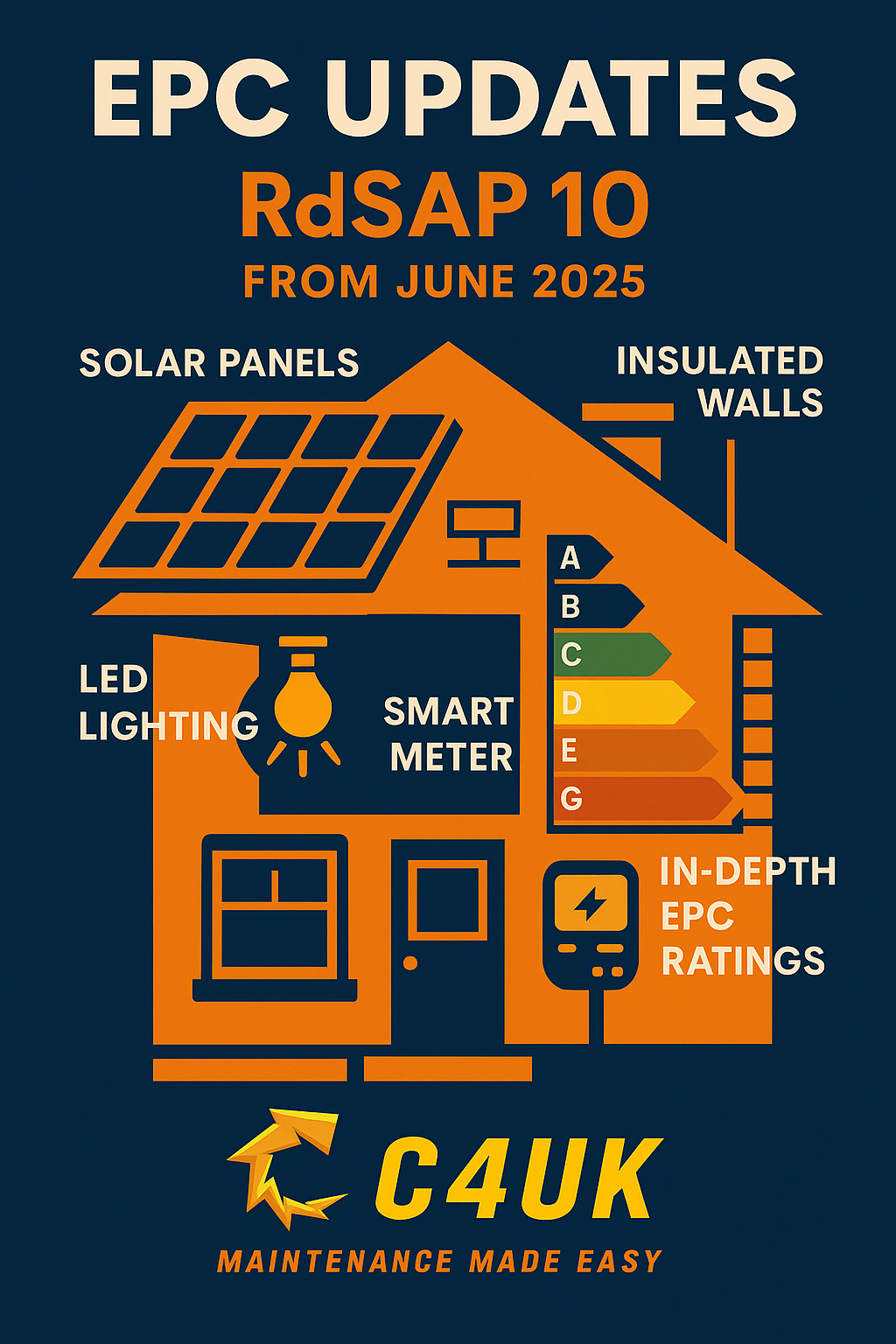
Stay ahead in Surrey: Learn what RdSAP 10 means for Energy Performance Certificates (EPCs)
Real-life EPC inspections are about to get an upgrade—beginning June 2025—thanks to RdSAP 10. This new standard brings more accurate measurements, deeper insights, and fairer energy ratings for homeowners and landlords. Read on to understand what’s changing, why it matters, and how you can prepare.

1. What Is RdSAP 10?
RdSAP 10 stands for Reduced Data Standard Assessment Procedure version 10. It’s the updated method used to generate EPCs in the UK. Starting June 15, 2025, it replaces the current RdSAP 9.94 and includes:
- More precise measurements
- Comprehensive assessments of insulation, windows, heating, lighting, and renewables
- Enhanced accuracy through real data, not assumptions
In short, EPCs under RdSAP 10 will better reflect modern homes—and what landlords and homeowners truly need to know.
2. Why Is RdSAP 10 Needed?
Homes today are evolving—from loft conversions and smart bulbs to solar panels and heat pumps. The old EPC system couldn’t keep up. That’s why RdSAP 10 aims to:
- Improve accuracy
- Adjust for modern appliances and insulation
- Support UK’s Net-Zero goals
- Provide better upgrade advice
🔍 3. The 12 Big Changes in RdSAP 10
Here’s how EPC assessments are getting more precise:
| Feature | RdSAP 9.94 | RdSAP 10 |
|---|---|---|
| Windows | Grouped by property age | Measured individually (size, glazing, shading) |
| Walls | Broad age bands | Mixed construction and extensions included |
| Roofs | Basic insulation only | Loft conversions measured, photos added |
| Floors | Single default type | Ground/floor type and insulation recorded |
| Hot Water | Cylinder presence noted | Size (liters) and heat loss measured |
| Heating | General boilers noted | Make zones, controls, and multiple systems |
| Ventilation | Not included | Make zones, controls, and multiple systems |
| Lighting | Basic fittings | Bulb types counted—LED, halogen, etc. |
| Smart Tech | Ignored | Solar PV, heat pumps, and smart meters included |
| U-Values | Default values | Updated for modern materials |
| Evidence | Estimates allowed | Photos & documents preferred |
| Calc Engine | SAP 9.92 | SAP 10.2 with actual fuel costs & CO₂ focus |
4. What It Means for EPC Ratings
- Some homes may fall in rating, especially older homes with little evidence.
- Others will improve, especially those with green tech or good insulation.
- Lenders will trust these EPCs more, making them more important for landlords and sellers.
🏘️ 5. Impact on Surrey Landlords & Homeowners
- MEES still applies: Properties must meet minimum EPC standards to rent or sell.
- Timing matters: Get your EPC before or after June—wet your strategy based on upgrades.
- Evidence is vital: Keep records of any improvements like LED bulbs, insulation, controls, or solar installs.
🛠️ 6. What Homeowners Should Do Now
- Check your EPC expiry date
- Gather upgrade documents (e.g., boiler install paperwork)
- Make easy improvements: LEDs, loft insulation, draught-proofing
- Book assessment: Choose whether to inspect before or after RdSAP 10 begins
💼 7. What It Means for Energy Assessors (DEAs)
Surveyors need:
- Extra training and CPD on LnSAP procedures
- More time per survey (up from 30–45 min to 60–90 min+)
- Tools like laser measures, camera, flashlights, and loft gear
- To be transparent about the 15–30% price increase
📝 8. Step-By-Step Preparation for RdSAP 10
- Review EPC due date
- Decide on pre- or post-June assessment
- Collect documents: Bills, installation manuals, invoices
- Upgrade LED lighting
- Insulate the loft and seal gaps
- Install smart heating controls
- Hire a qualified assessor (see our suggestions below)
- Mention RdSAP 10 in your booking
❓ FAQs
- When does it start? June 15, 2025
- Is my old EPC valid? Yes—it’s valid for 10 years
- Will my rating change? Changes depend on evidence and updates
- What’s a good rating? Aim for A or B; D is average
- Is it more expensive? Yes, because of extra time and detail

Leave a Reply